

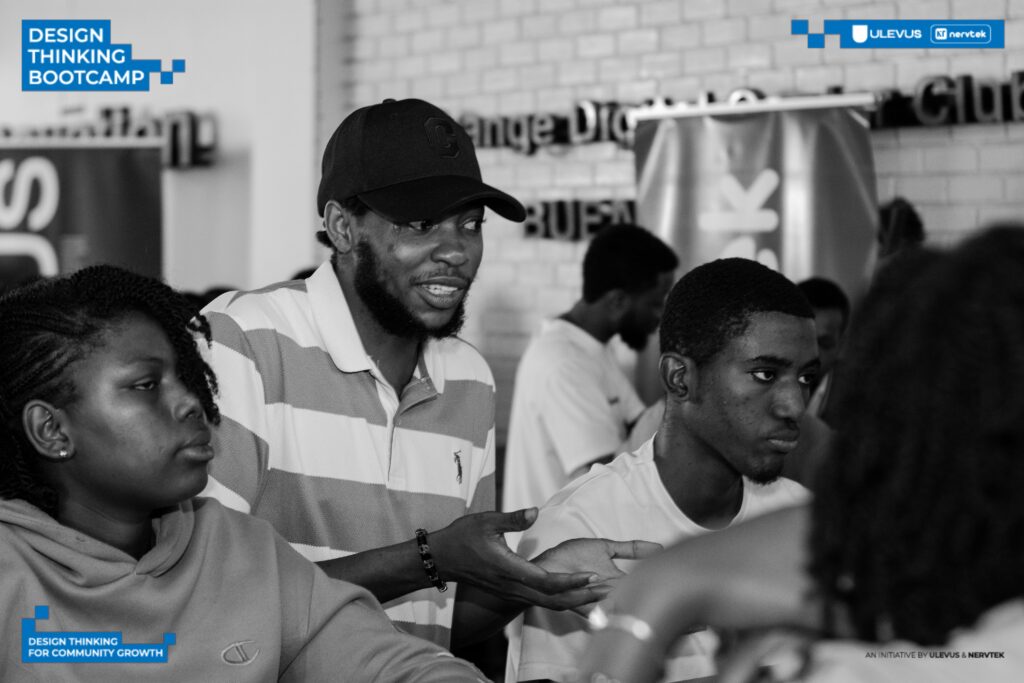
Design Thinking: Building Stronger Communities Through Human-Centered Innovation
Why Design Thinking Matters Today Imagine a community where young people help solve flooding problems, university students redesign transportation systems, local entrepreneurs co-create sustainable solutions, and teachers transform classrooms into innovation hubs. This is not imagination. It is the power of Design Thinking. Design Thinking is more than a process used by designers or tech companies. It is a humancentered approach to problem-solving that helps people understand real needs, generate meaningful ideas, test solutions quickly, and improve communities collaboratively. At its heart, Design Thinking asks one powerful question: How might we create solutions that truly improve people’s lives?” Today, organizations, schools, governments, and entrepreneurs around the world are using Design Thinking to address complex challenges such as climate change, waste management, sustainable development, youth unemployment, and educational inequality. But perhaps the most important thing about Design Thinking is this: It gives ordinary people the confidence to believe their ideas matter. What Is Design Thinking? Design Thinking is a creative problem-solving framework that focuses on understanding people deeply before creating solutions. Unlike traditional methods that often prioritize systems or processes first, Design Thinking prioritizes people. Instead of asking only: • “What solution can we build?” It also asks: • “Who is affected?” • “What are they experiencing?” • “What challenges do they face daily?” • “What solutions would genuinely help them?” This mindset helps organizations and communities create solutions that are practical, inclusive, and sustainable. One of the most important principles of Design Thinking is collaboration. It values diverse perspectives and encourages people from different backgrounds to contribute ideas together. Instead of designing for people, Design Thinking promotes designing with people. The Five Core Stages of Design Thinking. 1. Empathize 2. Define 3. Ideate 4. Prototype 5. Test Each stage builds upon the previous one and encourages continuous learning. Stage 1: Empathize – Understanding People First The first stage focuses on listening and understanding. Before attempting to solve a problem, teams spend time learning about the people affected by it. This may involve conversations, observations, interviews, or community engagement activities. The goal is to understand: • People’s frustrations • Their motivations • Daily experiences • Emotional challenges Empathy is important because meaningful solutions cannot be created without understanding real human needs. When people feel heard and included, collaboration becomes stronger and solutions become more effective. Stage 2: Define – Identifying the Real Problem After gathering information, teams analyse what they learned and identify the core challenge. Often, the first problem people notice is only a symptom of a deeper issue. Design Thinking helps teams move beyond assumptions and focus on root causes. For example, a transportation issue may actually involve concerns about safety, accessibility, affordability, or reliability. Defining the problem clearly helps teams focus their energy on creating more meaningful and targeted solutions. Stage 3: Ideate – Generating Creative Ideas Once the challenge is clearly understood, teams begin exploring possible solutions. This phase encourages creativity and open thinking. Participants are encouraged to generate many ideas without immediately criticizing or limiting them. Common ideation techniques include: Brainstorming, Mind mapping, Storyboarding, and Group discussions. The purpose of ideation is to unlock new possibilities and encourage innovation from multiple perspectives. Design Thinking values collaboration because diverse viewpoints often lead to stronger and more creative ideas. Stage 4: Prototype – Bringing Ideas to Life In this stage, teams create simple versions of their ideas to explore how solutions might work in real life. A prototype is not a final product. It is a basic model designed for learning and experimentation. Prototypes may include: Sketches, Models, Mock-up applications, or Storyboards. The goal is to test ideas quickly, identify weaknesses early, and improve solutions before full implementation. Rapid prototyping encourages action and reduces fear of failure by treating mistakes as opportunities for learning. Stage 5: Test – Learning Through Feedback The final stage involves presenting solutions to users and gathering feedback. Testing allows teams to understand: • What works well • What needs improvement • What challenges still exist • How users respond to the solution This stage is essential because it keeps communities involved throughout the innovation process. Rather than assuming a solution is perfect, Design Thinking encourages continuous improvement and adaptation. Why Design Thinking Is Important Design Thinking encourages: • Creativity • Collaboration • Empathy • Innovation • Problem-solving • Community participation Design Thinking has become increasingly valuable because it combines creativity with practical problem-solving. It encourages people to work together, share ideas, and approach challenges from different perspectives. Focusing on empathy helps teams better understand the real needs and experiences of others before creating solutions. The process also strengthens communication and collaboration, making it easier for individuals and communities to solve problems collectively. Because Design Thinking promotes experimentation and learning, it helps build confidence and encourages innovation without fear of failure. It helps people feel empowered to contribute ideas and work together toward meaningful change. Today, Design Thinking is widely used in education, entrepreneurship, healthcare, technology, and community development because it creates solutions that are more thoughtful, inclusive, and centered around people’s needs. Schools and universities increasingly use Design Thinking to encourage critical thinking and creativity among students. Communities also benefit because the process promotes participation and shared ownership of solutions. When people work together to identify problems and create ideas collaboratively, innovation becomes more inclusive, communities feel empowered, young people develop leadership skills, and Solutions become more sustainable. Design Thinking reminds us that innovation is not limited to experts alone. Everyone has the potential to contribute valuable ideas. As global challenges continue to grow, human-centered innovation will become increasingly important. Design Thinking is more than a method for solving problems. It is a mindset built on empathy, creativity, collaboration, and action. By understanding one another deeply and working together toward solutions, Design Thinking helps communities become more innovative, resilient, and connected. Whether used in schools, businesses, startups, or local communities, Design Thinking reminds us that meaningful innovation begins with people and that innovation belongs to everyone.
Design Thinking: Building Stronger Communities Through Human-Centered Innovation Read More »
