January 2026

e container

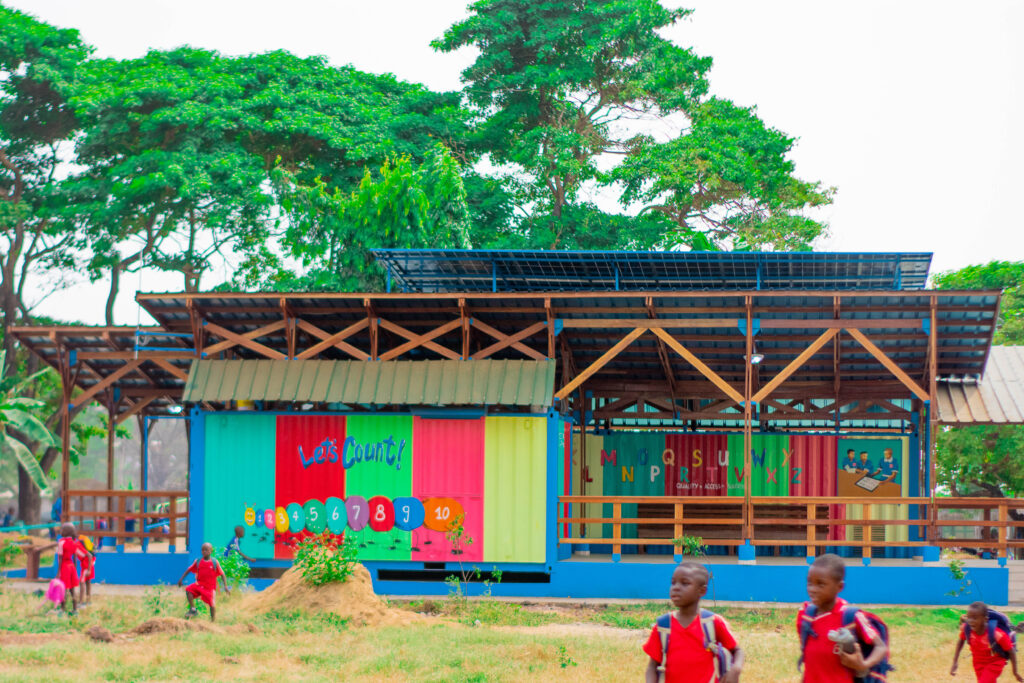
The E-Container Project is quietly revolutionizing primary education in Cameroon’s underserved regions, and Nervtek is right at the center of making it happen.

The E-Container Project is quietly revolutionizing primary education in Cameroon’s underserved regions, and Nervtek is right at the center of making it happen. As a Buea-based STEM education innovator, Nervtek—led by founder and CEO Nzometiah Nervis specializes in hands-on, accessible technology training that turns young minds into creators rather than passive learners. Through our makerspace programs, the award-winning nTron™ STEM Kit, holiday tech camps, and tailored workshops in robotics, coding, AI, and digital tools, we democratize STEM access for Cameroonian youth. Our mission is straightforward: equip children and educators with practical skills to solve local problems and thrive in a digital world. That’s exactly why UNICEF Cameroon tapped us to deliver specialized teacher training as part of their flagship Connect My School initiative, powered by solar-equipped e-containers. These e-containers repurposed shipping units transformed into fully functional digital learning hubs—are more than infrastructure. Built with recycled materials, solar-powered, and stocked with tablets, laptops, reliable connectivity (often supported by partners like IHS Towers), and offline-capable educational software, they address Cameroon’s harsh realities: only a tiny fraction of schools have internet, conflict in the Anglophone regions has displaced thousands of learners, and traditional classrooms struggle with overcrowded benches, outdated methods, and scarce resources. The project, under UNICEF’s Connect My School umbrella, aims to close the digital divide, boost foundational literacy and numeracy, and build 21st-century competencies like critical thinking and collaboration. Sites in places like Melong, Bilongué in Douala, and now expanding to Limbe are already showing results—over 1,000 pupils per hub gain access to interactive, multimedia learning that continues even during power cuts or connectivity drops. Nervtek’s contribution shines brightest in the teacher training component. In late January 2026, we ran an intensive three-day program at GPS Mile 1 in Limbe for 30 government primary school teachers. The agenda was deliberately practical and pedagogy-driven: no theory overload, just hands-on sessions that built real confidence. Day one focused on Microsoft 365 as a teaching powerhouse. Teachers learned to draft structured digital lesson plans in Word (complete with tables for objectives, activities, and assessments), create child-friendly PowerPoint slides emphasizing visuals over dense text, build auto-graded quizzes in Microsoft Forms for quick class tests and homework, and securely store/share resources via OneDrive. Each participant walked away with a complete digital lesson plan and a ready-to-use 10-question quiz tailored to their subject. Day two shifted to creative, tablet-based engagement using MediBang Paint for drawing and illustration. Sessions covered basic tools—brushes, layers, colors—and showed how to apply them across the curriculum: sketching animals for science, shapes for math, maps for social studies, or simple comics for English storytelling. Teachers designed illustrated visuals and planned group tablet activities, while we covered classroom management essentials like time limits, rotation strategies, and preventing misuse in shared-device settings. The final day brought in Google Workspace for collaboration and monitoring. Teachers explored Docs and Slides for group-edited lesson materials, Forms for attendance tracking and performance trends, and Drive for organized class folders with offline access. The capstone was a group planning exercise: each school team mapped out a four-month pupil bootcamp featuring weekly hands-on sessions, monthly assessments, and sustainable follow-up strategies. This training wasn’t abstract—it equipped teachers to immediately lead their own student bootcamps using the e-container’s tools. By blending Microsoft and Google ecosystems with creative apps like MediBang, we gave educators versatile, low-bandwidth options that work in Cameroon’s context. The shift is already visible. Teachers who once relied on chalkboard lectures now prepare dynamic lessons, assess understanding in real time, and track attendance digitally—freeing them to focus on individual needs. Confidence soars when they see pupils light up over a drawn diagram or interactive quiz instead of copying notes. Students benefit directly: visual storytelling makes vocabulary stick, collaborative tablet work builds teamwork, and gamified elements reduce dropout risk in conflict-affected areas. In pilot e-container schools, children report easier comprehension through videos and drawings, while teachers note sharper engagement and better foundational skills. Compared to traditional Cameroonian classrooms—often 80–100 pupils per teacher, heavy on rote memorization, limited materials, and minimal tech—this approach flips the script. Digital tools enable active, visual, personalized learning that traditional methods simply cannot scale. The e-container bridges gaps that developed countries take for granted: one-to-one devices, constant connectivity, and ongoing professional development. Yet projects like this show Cameroon isn’t playing catch-up—it’s adapting smartly. By prioritizing solar power, offline functionality, and local expertise (like Nervtek’s curriculum design), we’re building resilient models that other low-resource settings can replicate. At Nervtek, we’re proud to partner with UNICEF Cameroon and supporters like IHS Towers to deliver this transformation. Every teacher we train, every pupil who discovers coding or digital creativity through our frameworks, moves us closer to a generation ready to innovate for Cameroon and beyond. The e-container isn’t just a classroom—it’s proof that targeted, practical STEM integration can change trajectories, one school at a time.
The E-Container Project is quietly revolutionizing primary education in Cameroon’s underserved regions, and Nervtek is right at the center of making it happen. Read More »

nTron™ STEM Kit Wins First Prize at the Cameroon Pachi Panda Challenge, Sets Sights on Continental Finals in South Africa

nTron™ STEM Kit Wins First Prize at the Cameroon Pachi Panda Challenge, Sets Sights on Continental Finals in South Africa

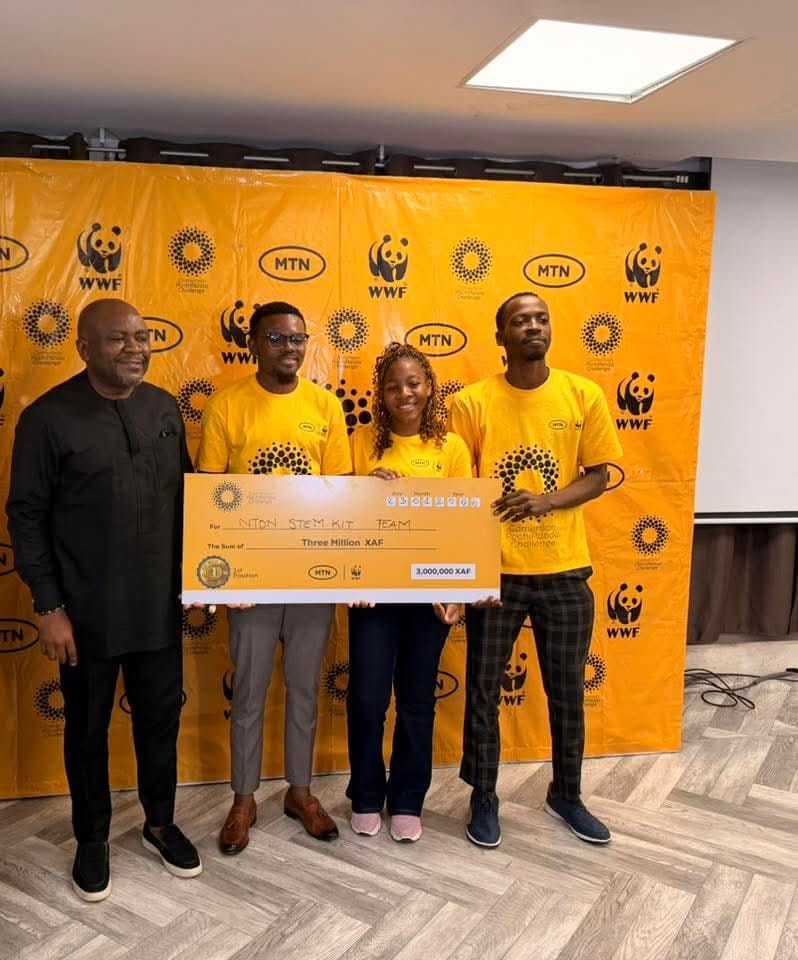
The nTron™ STEM Kit won First Prize at the Cameroon Pachi Panda Challenge, an innovation and sustainability competition organised by MTN Cameroon in partnership with WWF Cameroon. Selected among the top 10 finalists from over 400 projects nationwide, this milestone represents a powerful validation of Nervtek’s vision to transform STEM education through hands-on, sustainable learning solutions. Beyond the national recognition, this achievement comes with an even greater opportunity: representing Cameroon at the Continental Finals in South Africa, where the nTron™ Kit will compete with winning innovations from across Africa. The nTron™ Kit At the heart of this success is the nTron™ STEM Kit, an educational solution designed to make learning science and technology engaging, practical, and accessible for children ages 6 and above. The kit features 16+ modularised electronic components, including sensors, actuators, a programmable board, and a solar panel. Learners can assemble and experiment with these components while exploring coding, artificial intelligence, robotics, renewable energy, and sustainability in a simplified and intuitive way. One of the most distinctive elements of the nTron™ Kit is its 3D-printed robot made from recycled plastic bottles, reinforcing environmental responsibility while teaching core engineering and computational thinking skills. By blending creativity, problem-solving, and sustainability, the kit empowers learners to move beyond theory into real-world application one kit per student. Watch video here. The Team This achievement is the result of months of hard work, collaboration, and determination by the Nervtek team. The organisation was proudly represented at the challenge by: Njita Arnaud, Program Manager, Asobo Subin-Bih Joyce, Education Director, Youmbi Wilfried, Makerspace Manager Their dedication, and shared commitment to educational impact played a critical role in transforming an idea into a nationally recognised innovation. Inside the Cameroon Pachi Panda Challenge Journey Launched on January 9, 2026, this second edition of the Cameroon PachiPanda Challenge invited young innovators to propose technological solutions around three themes: waste management, water and energy management, and food security. The Cameroon Pachi Panda Challenge is more than a competition it is a growth journey for innovators focused on eco-entrepreneurship and sustainable development. “Last year, the Cameroon PachiPanda was a great success, and this year we have seen a significant momentum from the youth around projects covering many areas related to environmental protection, sustainable agriculture, and renewable energies. There have been many innovative ideas that align with WWF’s mission to ensure that humanity lives in harmony with nature. I am very pleased with the projects presented as well as the winners because they have set a very high standard.” Alain Ononino, Country Director of WWF Cameroon. During the programme, finalists participated in intensive sessions covering key entrepreneurial skills, including business models and financial projections, Lean Model Canvas workshops, pitch deck creation, marketing strategies, and environmental sustainability masterclasses. These sessions sharpened the team’s ability to structure scalable projects, communicate impact to investors and stakeholders, and position innovation within a sustainability-driven economy. This experience strengthens Nervtek’s entrepreneurial foundation while reinforcing the importance of aligning technology, education, and environmental responsibility. The Win Winning the Cameroon Pachi Panda Challenge marks a defining moment not only for Nervtek, but for the future of STEM education in Cameroon and beyond. “The winners today are proof that Cameroonian youth possess the talent, creativity, and motivation needed to propose concrete technological solutions that can help the country and Africa in general face current climate challenges more effectively. MTN Cameroon is proud to participate in the development of these young entrepreneurs while contributing sustainably and inclusively to the progress of Cameroon,” stated Wanda Matandela, General Director of MTN Cameroon. The nTron™ Kit directly addresses critical gaps in access to quality STEM learning by offering an affordable, practical, and engaging solution that nurtures curiosity and innovation from an early age. By integrating recycled materials and renewable energy concepts, the kit also promotes environmental awareness and responsible innovation. Launched on January 9, 2026, this second edition of the Cameroon PachiPanda Challenge invited young innovators to propose technological solutions around three themes: waste management, water and energy management, and food security. The three winners will receive, in order, 3 million, 2 million, and 1.5 million Fcfa, in addition to training and connectivity equipment offered to all teams. Their preparation continues as they will represent Cameroon at the pan-African final scheduled for February 2026 in South Africa, alongside young innovators from other African countries such as Zambia, Uganda, Nigeria, and the host country. It is worth noting that Cameroon secured first and third place in this pan-African final during the last edition. This recognition affirms Nervtek’s mission to empower young innovators, equip educators with effective tools, and contribute to Africa’s growing ecosystem of technology-driven solutions. Looking Ahead to South Africa With the national victory secured, all eyes now turn to the Continental Finals in South Africa, where Nervtek will represent Cameroon on a broader African stage. The team is energized, focused, and ready to take on the next challenge. Nervtek extends sincere gratitude to MTN Cameroon, WWF Cameroon, and all partners and stakeholders who continue to support innovation, education, and sustainability across the continent. This journey is far from over. As Nervtek continues to push boundaries and inspire the next generation of problem-solvers, we invite you to follow our story and be part of a future shaped by innovation, learning, and purpose. Read more about the nTron™ STEM Kit

nTron™ STEM Kit Wins First Prize at the Cameroon Pachi Panda Challenge, Sets Sights on Continental Finals in South Africa Read More »

the dark side of ai for children

Young People’s Rights in the Age of AI: Why Their Voice Matters Now

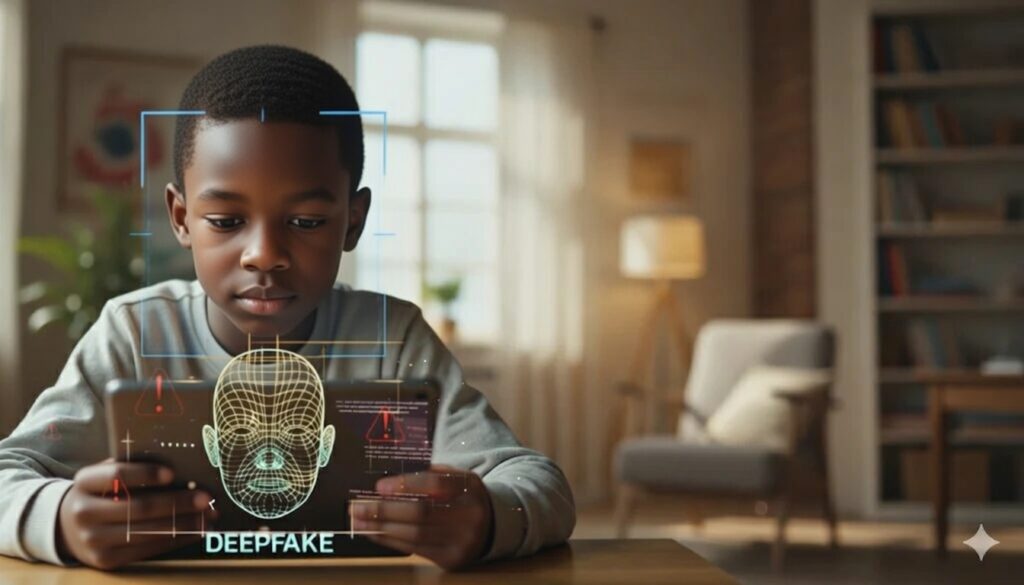
Young People’s Rights in the Age of AI: Why Their Voice Matters Now Artificial intelligence already shapes the daily lives of billions of young people worldwide. Whether they are scrolling through social media, chatting with AI companions, or using educational apps, children and teenagers are immersed in AI-powered technology. But as this digital transformation accelerates, one critical question demands urgent attention: Are young people’s fundamental rights being protected in this new landscape? The answer is complex and concerning. Online or offline, children’s rights to privacy, free expression, education, and safety must be safeguarded. Yet current evidence suggests significant gaps between the promise of AI and the protection of young users. The Scale of the Challenge Nearly three quarters of teens report using AI chatbots, according to recent research. This is not a distant future scenario it’s happening right now. Young people aren’t treating AI as an experiment; for them, it’s simply part of everyday life. From classroom learning tools to companion chatbots, AI technologies have been rapidly deployed to hundreds of millions of children and teens. But this rapid adoption has come with documented harms. Widespread issues have been reported including mental health problems, financial harm, medical harm, emotional dependence, manipulation and deception, and even cases involving self-harm and suicide. The statistics are sobering: approximately one in three teen users of AI chatbots report feeling uncomfortable with something an AI chatbot has included in an output. Privacy Under Pressure Children’s data has become a commodity in the AI era. The updated Children’s Online Privacy Protection Act (COPPA) rules that took effect in June 2025 recognize this reality. The Federal Trade Commission stated that using a child’s personal information to train or develop artificial intelligence technologies requires separate, verifiable parental consent. The regulations have also expanded protections. The definition of “personal information” now includes biometric identifiers like voiceprints and facial templates, and operators are prohibited from indefinitely retaining children’s data. These changes acknowledge that in an AI-driven world, a child’s voice, face, and behavioral patterns are as sensitive as their name and address. Yet enforcement and compliance remain ongoing challenges. States have stepped in with their own regulations. California recently enacted legislation requiring companion chatbot platforms to clearly disclose when users are interacting with AI, with additional protections for minors including break reminders and measures to prevent exposure to sexually explicit content. The Danger of AI Companions Perhaps no area illustrates the urgency of protecting children’s rights more starkly than AI companion chatbots. These systems are designed to form emotional bonds with users through simulated empathy and personalized interactions. For vulnerable young people, the consequences can be devastating. More than seventy percent of American children are now using these AI products, according to lawmakers who introduced protective legislation in 2025. The bipartisan GUARD Act represents growing recognition that AI companions pose unique risks to minors. The proposed legislation would ban AI companies from providing AI companions to minors and create new criminal penalties for companies that knowingly make available to minors AI systems that solicit or produce sexual content. The concerns extend beyond chatbots. AI-generated synthetic media has created new categories of harm. A federal lawsuit filed in October 2025 against, a website using AI to create nonconsensual nude images, highlights the severe privacy violations possible with generative AI technologies. The case may become the first major application of the TAKE IT DOWN Act, the new federal law requiring platforms to remove AI-generated or real intimate images shared without consent. AI-Generated Child Sexual Abuse Material: A Growing Threat One of the most disturbing developments in AI technology is its use to create fabricated child sexual abuse material. AI algorithms now possess the ability to generate realistic but entirely fake explicit content involving minors, creating what child protection advocates call an unsettling blur between authentic and fabricated material. This technology poses risks that extend far beyond the creation of illegal content itself. According to the Child Rescue Coalition, AI-generated material introduces a new dimension to online threats by amplifying the potential for sextortion. Predators or even peers can exploit these AI-generated images to threaten or coerce children into compliance with their demands, whether sending money, complying with threats, or engaging in sexual acts to prevent the release of fake content. The implications are chilling: predators no longer need actual explicit photos of a child to exploit or threaten them. They can now create convincing fabricated versions using publicly available photos from school yearbooks, sports teams, or social media profiles. This reality fundamentally changes the risk landscape for every child with any online presence. The challenge for parents and law enforcement is equally complex. When fabricated content looks shockingly real, distinguishing between what’s authentic and what’s AI-generated becomes increasingly difficult. This complicates both the prosecution of offenders and the protection of victims, as the traditional markers used to identify and combat child sexual abuse material become less reliable in an AI-generated context. Deepfakes and Digital Impersonation Beyond the creation of explicit material, AI-powered deepfake technology enables sophisticated forms of impersonation that can be used to manipulate and deceive children. Deepfakes involve the manipulation of visuals and audio to create convincing yet entirely fabricated content, allowing predators to create fake identities or impersonate other children. This capability becomes particularly dangerous when predators impersonate someone familiar to a child—a classmate, friend, or peer from online communities. By exploiting pre-existing connections and trust, predators can lower a child’s defenses and manipulate them into compromising situations. The impersonated identity might be used to request explicit content, arrange meetings, or establish relationships built entirely on deception. As Phil Attwood, Director of Impact at Child Rescue Coalition, emphasizes, parents cannot ignore the concerning impact of AI on child sexual abuse and online exploitation. Staying informed, having open conversations with children, and actively monitoring their online activities are crucial steps. By taking a proactive role, parents contribute to creating a safer digital space for their children in the face of evolving technological challenges. The sophistication of these impersonation tactics

Young People’s Rights in the Age of AI: Why Their Voice Matters Now Read More »

Scroll to Top