Author name: NK

e container

The E-Container Project is quietly revolutionizing primary education in Cameroon’s underserved regions, and Nervtek is right at the center of making it happen.

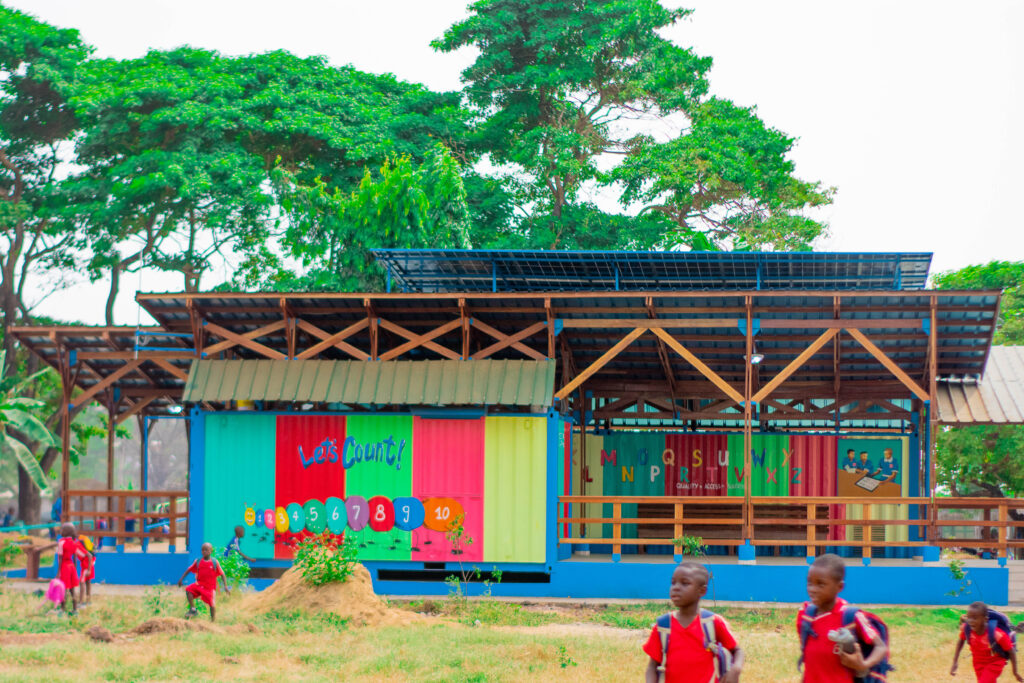
The E-Container Project is quietly revolutionizing primary education in Cameroon’s underserved regions, and Nervtek is right at the center of making it happen. As a Buea-based STEM education innovator, Nervtek—led by founder and CEO Nzometiah Nervis specializes in hands-on, accessible technology training that turns young minds into creators rather than passive learners. Through our makerspace programs, the award-winning nTron™ STEM Kit, holiday tech camps, and tailored workshops in robotics, coding, AI, and digital tools, we democratize STEM access for Cameroonian youth. Our mission is straightforward: equip children and educators with practical skills to solve local problems and thrive in a digital world. That’s exactly why UNICEF Cameroon tapped us to deliver specialized teacher training as part of their flagship Connect My School initiative, powered by solar-equipped e-containers. These e-containers repurposed shipping units transformed into fully functional digital learning hubs—are more than infrastructure. Built with recycled materials, solar-powered, and stocked with tablets, laptops, reliable connectivity (often supported by partners like IHS Towers), and offline-capable educational software, they address Cameroon’s harsh realities: only a tiny fraction of schools have internet, conflict in the Anglophone regions has displaced thousands of learners, and traditional classrooms struggle with overcrowded benches, outdated methods, and scarce resources. The project, under UNICEF’s Connect My School umbrella, aims to close the digital divide, boost foundational literacy and numeracy, and build 21st-century competencies like critical thinking and collaboration. Sites in places like Melong, Bilongué in Douala, and now expanding to Limbe are already showing results—over 1,000 pupils per hub gain access to interactive, multimedia learning that continues even during power cuts or connectivity drops. Nervtek’s contribution shines brightest in the teacher training component. In late January 2026, we ran an intensive three-day program at GPS Mile 1 in Limbe for 30 government primary school teachers. The agenda was deliberately practical and pedagogy-driven: no theory overload, just hands-on sessions that built real confidence. Day one focused on Microsoft 365 as a teaching powerhouse. Teachers learned to draft structured digital lesson plans in Word (complete with tables for objectives, activities, and assessments), create child-friendly PowerPoint slides emphasizing visuals over dense text, build auto-graded quizzes in Microsoft Forms for quick class tests and homework, and securely store/share resources via OneDrive. Each participant walked away with a complete digital lesson plan and a ready-to-use 10-question quiz tailored to their subject. Day two shifted to creative, tablet-based engagement using MediBang Paint for drawing and illustration. Sessions covered basic tools—brushes, layers, colors—and showed how to apply them across the curriculum: sketching animals for science, shapes for math, maps for social studies, or simple comics for English storytelling. Teachers designed illustrated visuals and planned group tablet activities, while we covered classroom management essentials like time limits, rotation strategies, and preventing misuse in shared-device settings. The final day brought in Google Workspace for collaboration and monitoring. Teachers explored Docs and Slides for group-edited lesson materials, Forms for attendance tracking and performance trends, and Drive for organized class folders with offline access. The capstone was a group planning exercise: each school team mapped out a four-month pupil bootcamp featuring weekly hands-on sessions, monthly assessments, and sustainable follow-up strategies. This training wasn’t abstract—it equipped teachers to immediately lead their own student bootcamps using the e-container’s tools. By blending Microsoft and Google ecosystems with creative apps like MediBang, we gave educators versatile, low-bandwidth options that work in Cameroon’s context. The shift is already visible. Teachers who once relied on chalkboard lectures now prepare dynamic lessons, assess understanding in real time, and track attendance digitally—freeing them to focus on individual needs. Confidence soars when they see pupils light up over a drawn diagram or interactive quiz instead of copying notes. Students benefit directly: visual storytelling makes vocabulary stick, collaborative tablet work builds teamwork, and gamified elements reduce dropout risk in conflict-affected areas. In pilot e-container schools, children report easier comprehension through videos and drawings, while teachers note sharper engagement and better foundational skills. Compared to traditional Cameroonian classrooms—often 80–100 pupils per teacher, heavy on rote memorization, limited materials, and minimal tech—this approach flips the script. Digital tools enable active, visual, personalized learning that traditional methods simply cannot scale. The e-container bridges gaps that developed countries take for granted: one-to-one devices, constant connectivity, and ongoing professional development. Yet projects like this show Cameroon isn’t playing catch-up—it’s adapting smartly. By prioritizing solar power, offline functionality, and local expertise (like Nervtek’s curriculum design), we’re building resilient models that other low-resource settings can replicate. At Nervtek, we’re proud to partner with UNICEF Cameroon and supporters like IHS Towers to deliver this transformation. Every teacher we train, every pupil who discovers coding or digital creativity through our frameworks, moves us closer to a generation ready to innovate for Cameroon and beyond. The e-container isn’t just a classroom—it’s proof that targeted, practical STEM integration can change trajectories, one school at a time.

The E-Container Project is quietly revolutionizing primary education in Cameroon’s underserved regions, and Nervtek is right at the center of making it happen. Read More »

nTron™ STEM Kit Wins First Prize at the Cameroon Pachi Panda Challenge, Sets Sights on Continental Finals in South Africa

nTron™ STEM Kit Wins First Prize at the Cameroon Pachi Panda Challenge, Sets Sights on Continental Finals in South Africa

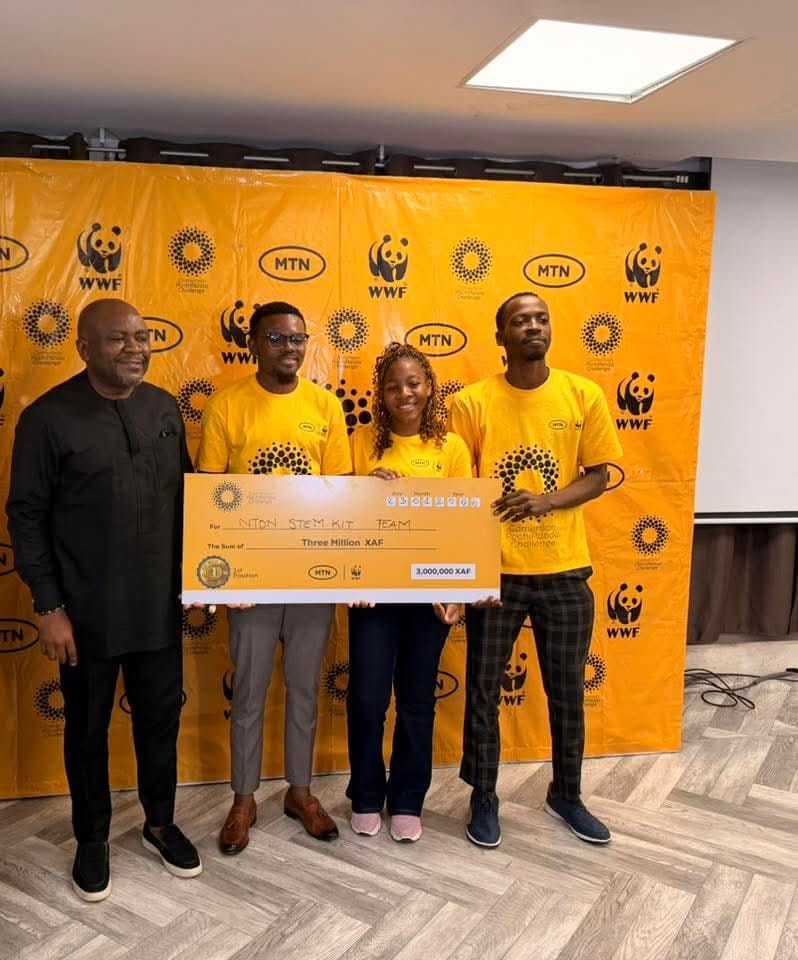
The nTron™ STEM Kit won First Prize at the Cameroon Pachi Panda Challenge, an innovation and sustainability competition organised by MTN Cameroon in partnership with WWF Cameroon. Selected among the top 10 finalists from over 400 projects nationwide, this milestone represents a powerful validation of Nervtek’s vision to transform STEM education through hands-on, sustainable learning solutions. Beyond the national recognition, this achievement comes with an even greater opportunity: representing Cameroon at the Continental Finals in South Africa, where the nTron™ Kit will compete with winning innovations from across Africa. The nTron™ Kit At the heart of this success is the nTron™ STEM Kit, an educational solution designed to make learning science and technology engaging, practical, and accessible for children ages 6 and above. The kit features 16+ modularised electronic components, including sensors, actuators, a programmable board, and a solar panel. Learners can assemble and experiment with these components while exploring coding, artificial intelligence, robotics, renewable energy, and sustainability in a simplified and intuitive way. One of the most distinctive elements of the nTron™ Kit is its 3D-printed robot made from recycled plastic bottles, reinforcing environmental responsibility while teaching core engineering and computational thinking skills. By blending creativity, problem-solving, and sustainability, the kit empowers learners to move beyond theory into real-world application one kit per student. Watch video here. The Team This achievement is the result of months of hard work, collaboration, and determination by the Nervtek team. The organisation was proudly represented at the challenge by: Njita Arnaud, Program Manager, Asobo Subin-Bih Joyce, Education Director, Youmbi Wilfried, Makerspace Manager Their dedication, and shared commitment to educational impact played a critical role in transforming an idea into a nationally recognised innovation. Inside the Cameroon Pachi Panda Challenge Journey Launched on January 9, 2026, this second edition of the Cameroon PachiPanda Challenge invited young innovators to propose technological solutions around three themes: waste management, water and energy management, and food security. The Cameroon Pachi Panda Challenge is more than a competition it is a growth journey for innovators focused on eco-entrepreneurship and sustainable development. “Last year, the Cameroon PachiPanda was a great success, and this year we have seen a significant momentum from the youth around projects covering many areas related to environmental protection, sustainable agriculture, and renewable energies. There have been many innovative ideas that align with WWF’s mission to ensure that humanity lives in harmony with nature. I am very pleased with the projects presented as well as the winners because they have set a very high standard.” Alain Ononino, Country Director of WWF Cameroon. During the programme, finalists participated in intensive sessions covering key entrepreneurial skills, including business models and financial projections, Lean Model Canvas workshops, pitch deck creation, marketing strategies, and environmental sustainability masterclasses. These sessions sharpened the team’s ability to structure scalable projects, communicate impact to investors and stakeholders, and position innovation within a sustainability-driven economy. This experience strengthens Nervtek’s entrepreneurial foundation while reinforcing the importance of aligning technology, education, and environmental responsibility. The Win Winning the Cameroon Pachi Panda Challenge marks a defining moment not only for Nervtek, but for the future of STEM education in Cameroon and beyond. “The winners today are proof that Cameroonian youth possess the talent, creativity, and motivation needed to propose concrete technological solutions that can help the country and Africa in general face current climate challenges more effectively. MTN Cameroon is proud to participate in the development of these young entrepreneurs while contributing sustainably and inclusively to the progress of Cameroon,” stated Wanda Matandela, General Director of MTN Cameroon. The nTron™ Kit directly addresses critical gaps in access to quality STEM learning by offering an affordable, practical, and engaging solution that nurtures curiosity and innovation from an early age. By integrating recycled materials and renewable energy concepts, the kit also promotes environmental awareness and responsible innovation. Launched on January 9, 2026, this second edition of the Cameroon PachiPanda Challenge invited young innovators to propose technological solutions around three themes: waste management, water and energy management, and food security. The three winners will receive, in order, 3 million, 2 million, and 1.5 million Fcfa, in addition to training and connectivity equipment offered to all teams. Their preparation continues as they will represent Cameroon at the pan-African final scheduled for February 2026 in South Africa, alongside young innovators from other African countries such as Zambia, Uganda, Nigeria, and the host country. It is worth noting that Cameroon secured first and third place in this pan-African final during the last edition. This recognition affirms Nervtek’s mission to empower young innovators, equip educators with effective tools, and contribute to Africa’s growing ecosystem of technology-driven solutions. Looking Ahead to South Africa With the national victory secured, all eyes now turn to the Continental Finals in South Africa, where Nervtek will represent Cameroon on a broader African stage. The team is energized, focused, and ready to take on the next challenge. Nervtek extends sincere gratitude to MTN Cameroon, WWF Cameroon, and all partners and stakeholders who continue to support innovation, education, and sustainability across the continent. This journey is far from over. As Nervtek continues to push boundaries and inspire the next generation of problem-solvers, we invite you to follow our story and be part of a future shaped by innovation, learning, and purpose. Read more about the nTron™ STEM Kit

nTron™ STEM Kit Wins First Prize at the Cameroon Pachi Panda Challenge, Sets Sights on Continental Finals in South Africa Read More »

the dark side of ai for children

Young People’s Rights in the Age of AI: Why Their Voice Matters Now

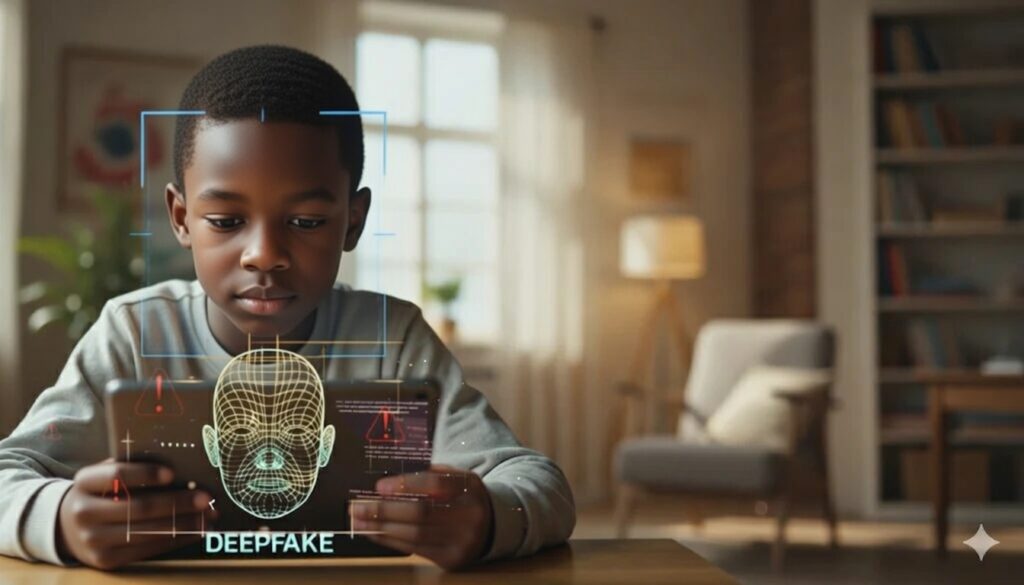
Young People’s Rights in the Age of AI: Why Their Voice Matters Now Artificial intelligence already shapes the daily lives of billions of young people worldwide. Whether they are scrolling through social media, chatting with AI companions, or using educational apps, children and teenagers are immersed in AI-powered technology. But as this digital transformation accelerates, one critical question demands urgent attention: Are young people’s fundamental rights being protected in this new landscape? The answer is complex and concerning. Online or offline, children’s rights to privacy, free expression, education, and safety must be safeguarded. Yet current evidence suggests significant gaps between the promise of AI and the protection of young users. The Scale of the Challenge Nearly three quarters of teens report using AI chatbots, according to recent research. This is not a distant future scenario it’s happening right now. Young people aren’t treating AI as an experiment; for them, it’s simply part of everyday life. From classroom learning tools to companion chatbots, AI technologies have been rapidly deployed to hundreds of millions of children and teens. But this rapid adoption has come with documented harms. Widespread issues have been reported including mental health problems, financial harm, medical harm, emotional dependence, manipulation and deception, and even cases involving self-harm and suicide. The statistics are sobering: approximately one in three teen users of AI chatbots report feeling uncomfortable with something an AI chatbot has included in an output. Privacy Under Pressure Children’s data has become a commodity in the AI era. The updated Children’s Online Privacy Protection Act (COPPA) rules that took effect in June 2025 recognize this reality. The Federal Trade Commission stated that using a child’s personal information to train or develop artificial intelligence technologies requires separate, verifiable parental consent. The regulations have also expanded protections. The definition of “personal information” now includes biometric identifiers like voiceprints and facial templates, and operators are prohibited from indefinitely retaining children’s data. These changes acknowledge that in an AI-driven world, a child’s voice, face, and behavioral patterns are as sensitive as their name and address. Yet enforcement and compliance remain ongoing challenges. States have stepped in with their own regulations. California recently enacted legislation requiring companion chatbot platforms to clearly disclose when users are interacting with AI, with additional protections for minors including break reminders and measures to prevent exposure to sexually explicit content. The Danger of AI Companions Perhaps no area illustrates the urgency of protecting children’s rights more starkly than AI companion chatbots. These systems are designed to form emotional bonds with users through simulated empathy and personalized interactions. For vulnerable young people, the consequences can be devastating. More than seventy percent of American children are now using these AI products, according to lawmakers who introduced protective legislation in 2025. The bipartisan GUARD Act represents growing recognition that AI companions pose unique risks to minors. The proposed legislation would ban AI companies from providing AI companions to minors and create new criminal penalties for companies that knowingly make available to minors AI systems that solicit or produce sexual content. The concerns extend beyond chatbots. AI-generated synthetic media has created new categories of harm. A federal lawsuit filed in October 2025 against, a website using AI to create nonconsensual nude images, highlights the severe privacy violations possible with generative AI technologies. The case may become the first major application of the TAKE IT DOWN Act, the new federal law requiring platforms to remove AI-generated or real intimate images shared without consent. AI-Generated Child Sexual Abuse Material: A Growing Threat One of the most disturbing developments in AI technology is its use to create fabricated child sexual abuse material. AI algorithms now possess the ability to generate realistic but entirely fake explicit content involving minors, creating what child protection advocates call an unsettling blur between authentic and fabricated material. This technology poses risks that extend far beyond the creation of illegal content itself. According to the Child Rescue Coalition, AI-generated material introduces a new dimension to online threats by amplifying the potential for sextortion. Predators or even peers can exploit these AI-generated images to threaten or coerce children into compliance with their demands, whether sending money, complying with threats, or engaging in sexual acts to prevent the release of fake content. The implications are chilling: predators no longer need actual explicit photos of a child to exploit or threaten them. They can now create convincing fabricated versions using publicly available photos from school yearbooks, sports teams, or social media profiles. This reality fundamentally changes the risk landscape for every child with any online presence. The challenge for parents and law enforcement is equally complex. When fabricated content looks shockingly real, distinguishing between what’s authentic and what’s AI-generated becomes increasingly difficult. This complicates both the prosecution of offenders and the protection of victims, as the traditional markers used to identify and combat child sexual abuse material become less reliable in an AI-generated context. Deepfakes and Digital Impersonation Beyond the creation of explicit material, AI-powered deepfake technology enables sophisticated forms of impersonation that can be used to manipulate and deceive children. Deepfakes involve the manipulation of visuals and audio to create convincing yet entirely fabricated content, allowing predators to create fake identities or impersonate other children. This capability becomes particularly dangerous when predators impersonate someone familiar to a child—a classmate, friend, or peer from online communities. By exploiting pre-existing connections and trust, predators can lower a child’s defenses and manipulate them into compromising situations. The impersonated identity might be used to request explicit content, arrange meetings, or establish relationships built entirely on deception. As Phil Attwood, Director of Impact at Child Rescue Coalition, emphasizes, parents cannot ignore the concerning impact of AI on child sexual abuse and online exploitation. Staying informed, having open conversations with children, and actively monitoring their online activities are crucial steps. By taking a proactive role, parents contribute to creating a safer digital space for their children in the face of evolving technological challenges. The sophistication of these impersonation tactics

Young People’s Rights in the Age of AI: Why Their Voice Matters Now Read More »

The Nervtek nTron Kit: Empowering Young Innovators Through Hands-On STEM Learning

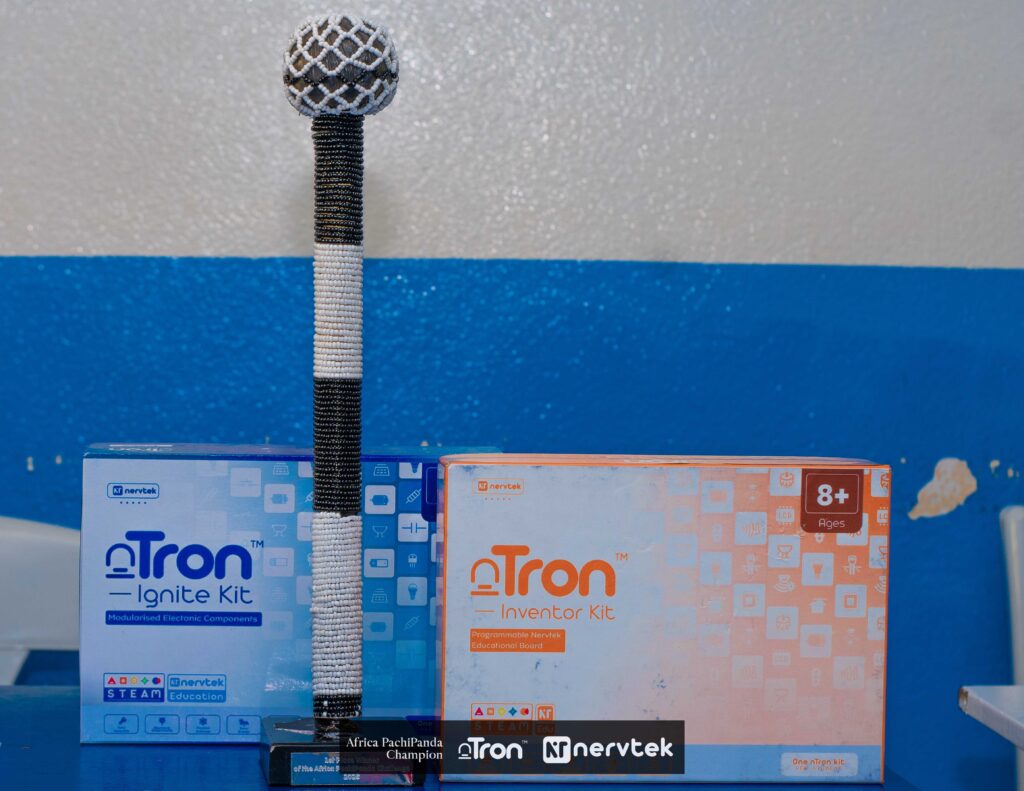
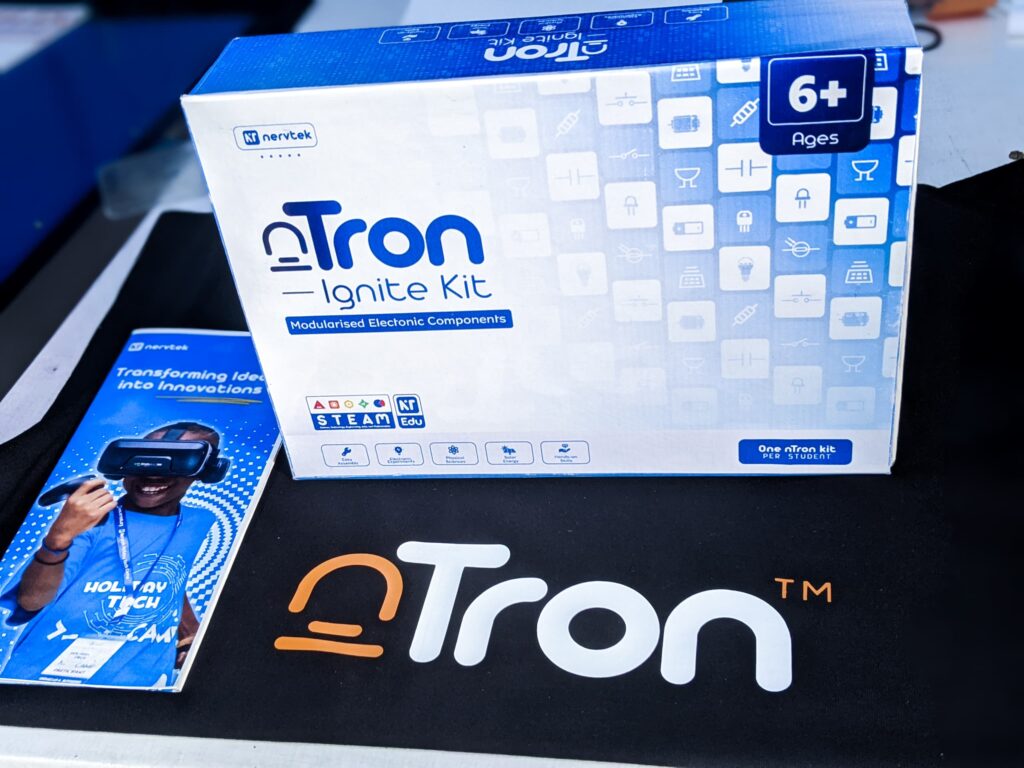
At Nervtek, we believe that STEM (Science, Technology, Engineering, and Mathematics) education should not remain abstract or theoretical. It should be practical, engaging, and accessible to every child. That is why we created the nTron Kit a locally designed and manufactured educational toolkit that equips students, educators, and innovators with the resources to bring ideas to life. Available in two versions the nTron Ignite Kit and the nTron Inventor Kit this tool is already transforming how young people learn and interact with science and technology. Why the nTron Kit Exist Most of the time during the academic year, schools follow a curriculum that focuses heavily on theory, with little emphasis on practice. This leaves students with knowledge they cannot apply. To bridge this gap, Nervtek has designed programs and tools that focus on hands-on, project-based learning—the nTron Kit being at the center of this mission. The kit allows learners to practice at home, in school, or in clubs, making STEM not just something they study, but something they can build, test, and explore on their own. History of the nTron The nTron Kit was first conceived four years ago during nervtek’s STEM and STEAM workshops. While working with students, we noticed a recurring challenge: many learners had little or no access to resources to practice what they were taught in class. This included activities such as: Building electronic circuits Coding and microcontroller programming Developing robotics and IoT projects   The nTron Kit was created to solve this problem. Today, it caters to children as young as 6 years old, helping them sharpen problem-solving skills, while also supporting young innovators and university students in science fields. Distribution and Adoption The nTron Kit is already in use in classrooms, robotics clubs, and makerspaces across Buea, Bamenda, Maroua, Douala, Yaoundé, and Monrovia, as well as in homes where parents want their children to explore STEM. Through our programs such as the Holiday Tech Camp we have placed these kits directly in the hands of young learners, enabling them to build confidence and curiosity in technology. What’s Inside the nTron Kit? Each nTron Ignite Kit is carefully packaged with components that support a wide range of experiments and projects. Inside, you’ll find: User Manual – detailed instructions for experiments and guides to extend learning Electronic components – resistors, capacitors, transistors, jumper cables Input/Output devices – push buttons, buzzer, small light bulb Power sources – battery holder, solar panel, batteries Motors – for mechanical movements and robotics builds 3D-printed robot parts – for assembly and creativity Microcontroller – for programming and building projects These materials support both guided experiments (like LED circuits and buzzer alarms) and open-ended projects, ensuring flexibility and creativity in learning Why the nTron Kit Matters By using the nTron, students strengthen their: Critical thinking and problem-solving skills Creativity and innovation mindset Confidence in STEM subjects The kit turns abstract theories into practical experiences, allowing learners to see, touch, and build technology themselves. This hands-on approach makes STEM fun, memorable, and impactful. Fostering Robotics Clubs and Innovation The nTron Kit is the foundation of several school robotics clubs. Students and teachers use it to create robots, obstacle-avoidance systems, and interactive games. These collaborative projects encourage teamwork, coding, and innovation skills they carry into higher education and real-world problem solving. Built Locally, Built for Impact Every nTron Kit is designed and assembled at the Nervtek Makerspace in Buea, Cameroon. This not only guarantees quality but also strengthens the local tech ecosystem by promoting African-led design and manufacturing. nTron Kit Ambassadors Students who excel with the nTron Kit often become ambassadors of innovation. They mentor peers, lead STEM clubs, and encourage more young learners to embrace science and technology. In this way, the nTron is more than a tool it’s a catalyst for community-driven change. Experiments, Games, and Endless Creativity The nTron Kit provides guided experiments like LED circuits, solar-powered setups, and buzzer alarms. But learners quickly discover that the kit’s flexibility allows them to go beyond the manual—designing their own interactive games, robotics projects, and IoT systems. This freedom to explore nurtures curiosity and resilience, two traits essential for future innovators. Lead the Way in Science, Technology, and Innovation. The nTron Kit is more than just an educational too it is Nervtek’s contribution to creating a generation of problem-solvers. By bridging the gap between theory and practice, it ensures that students don’t just dream of solutions, they have the tools to build them. With every kit distributed, every workshop delivered, and every project completed, we move closer to a future where African innovators lead the way in science and technology. Get your kit now and start building the future with us.

The Nervtek nTron Kit: Empowering Young Innovators Through Hands-On STEM Learning Read More »

Nervtek Holiday Tech Camp 2025: Inspiring Kids to Code and Build Robots

Eight weeks into the Nervtek Holiday Tech Camp (HTC) Buea 2025, the enthusiasm is unmistakable. We are thrilled to report that, in Buea alone, we are currently training over 90 children, including a supportive group of 27 girls who are actively participating and showcasing their growing interest and aptitude in technology. What started as a modest project in 2020 with just nine (9) inquisitive kids eager to learn about technology has blossomed into something truly inspirational and life-changing. This year, we proudly expanded the Holiday Tech Camp to the city of Bamenda, where twelve (12) eager young learners have already begun their technological journey. The students’ enthusiasm has been absolutely incredible. They display a strong desire to learn, actively engage in discussions, ask insightful questions, and collaborate effectively on projects. Their passion for technology shines through their eagerness to explore different modules and tackle new challenges. Starting with fundamental concepts and progressing to increasingly advanced applications, our curriculum is designed to develop students’ skills progressively. Below is an overview of the modules covered at each level during the first eight weeks: Our Level-by-Level Learning Path The camp curriculum is carefully structured to progressively build learners’ skills and knowledge in technology. Each level builds on the previous one, starting with foundational ideas and moving toward more complex applications. Here’s a breakdown of the topics covered at each level: Level One: Activities & Achievements: Scratch Programming with PictoBlox: These young learners were introduced to Scratch programming, where they used it to create animations and simple games using drag-and-drop coding, learning logic, sequencing, and computational thinking. They built interactive tools that responded to real-world inputs (e.g., clapping to trigger actions), fostering creativity and debugging skills. Their capstone projects included face and sound recognition, as well as a fruit catcher game. Robotics Fundamentals (nTron™ Kit/mBot): Learners were introduced to the exciting world of robotics, starting with what a robot is, its parts, and the various types of robots with real-world applications. They delved into robot components like sensors, controllers, actuators, and structural parts. Teamwork was emphasized as learners collaborated to assemble the nBot from the nTron™ Kit. Once assembled, they programmed the mBot to avoid obstacles, draw patterns, and detect edges to prevent falls. This hands-on experience strengthened their robotics and coding skills while nurturing collaboration, problem-solving, and creativity. In an AI robotics project, learners implemented a voice recognition model to initiate robot actions such as moving forward, backward, or turning demonstrating AI’s potential in robotic automation without physical human intervention. Drone Programming (TELLO): Participants explored unmanned aerial systems (UAVs) through theory and practice. They began with an overview of drones, their parts, and real-world applications like delivery, photography, mapping, and inspection. Using the DroneBlocks platform and TELLO EDU app, learners programmed drones and completed a successful delivery mission challenge. 3D Modeling with TinkerCAD: Learners spent a week creating simple designs using TinkerCAD, transforming basic shapes into digital models and physical objects via 3D printing. They learned the difference between 2D and 3D designs, explored real-world uses, and got hands-on with printers and materials such as PLA and ABS. By week’s end, each produced their first 3D-printed object, boosting creativity, problem-solving, and design skills. Soft Skills: Teamwork, patience, logical and strategic thinking, storytelling through projects. Level Two: Activities & Achievements: Programming with PictoBlox: Over two weeks, Level 2 learners explored programming, AI, and robotics. They learned how computers interpret instructions, different programming languages, and key coding concepts, then used PictoBlox to create interactive projects such as games, calculators, and chat simulations. They built and trained AI models, including a hand gesture recognition system that used a webcam to control sprite movements. They then switched their focus to physical computing and understanding sensors, controllers, and actuators and programmed automated robotic tasks with loops, conditionals, variables, and functions. 3D Printing (TinkerCAD/Creality): Learners advanced their design skills, creating functional 3D objects such as phone stands and cable organizers. They mastered shape manipulation, scaling, and alignment, prepared models for slicing, selected print settings for various materials, and troubleshot common printing issues. Drone Assembly and Regulations: Level 2 students assembled a laser-cut drone, learning its components and sourcing methods. They explored drone controls roll, pitch, yaw, throttle and drone flight laws in Cameroon, combining technical skills with regulatory knowledge to foster responsible drone use. Soft Skills: Problem-solving, critical thinking, iterative design, team collaboration, presentation skills, and operational principles for drones. Level Three: Activities & Achievements: Web Programming (JavaScript/HTML/CSS): Students were introduced to the fundamentals of web development, learning about static and dynamic websites. They studied webpage structure with HTML, styled pages with CSS (margins, padding, borders, content sizing), and explored forms and input fields for data collection. As a practical project, each created a personal “About Me” webpage, applying their skills in creative web design and enhancing user experience. Advanced Robotics: The focus was on robotic arms. Over two weeks, students learned about the role of robotic arms in industry, mechanical joint movements, electrical systems including circuits and microcontrollers (Arduino), sensors, actuators, degrees of freedom, types of end effectors, and control mechanisms. Through project-based learning, they assembled, wired, and programmed robotic arms, tackling exercises and assignments to develop problem-solving and creativity. Their functional prototypes demonstrated technical understanding and innovation. 3D Design & Laser Printing: Students modeled complex mechanical designs, focusing on fully articulated robotic arms. Using advanced techniques, they ensured parts fit and moved correctly, considered material choice and durability, linking their designs to real-world robotics and manufacturing. Soft Skills: Problem-solving under constraints, research, technical documentation. Level Four: Activities & Achievements: Professional Web Development: In this module, Level 4 learners explored professional web development from design to implementation. They began with UI/UX design in Figma, focusing on creating user-friendly layouts, before moving into hands-on coding. Using HTML and CSS, students built website structures and styled them with detailed elements such as borders, padding, and margins. They then advanced to JavaScript, adding interactivity, and Bootstrap, ensuring responsive and modern designs. The highlight of the course was the clone of
Nervtek Holiday Tech Camp 2025: Inspiring Kids to Code and Build Robots Read More »

Nervtek Makerspace: Cameroon’s Youth Innovation Hub for Hands-On STEM

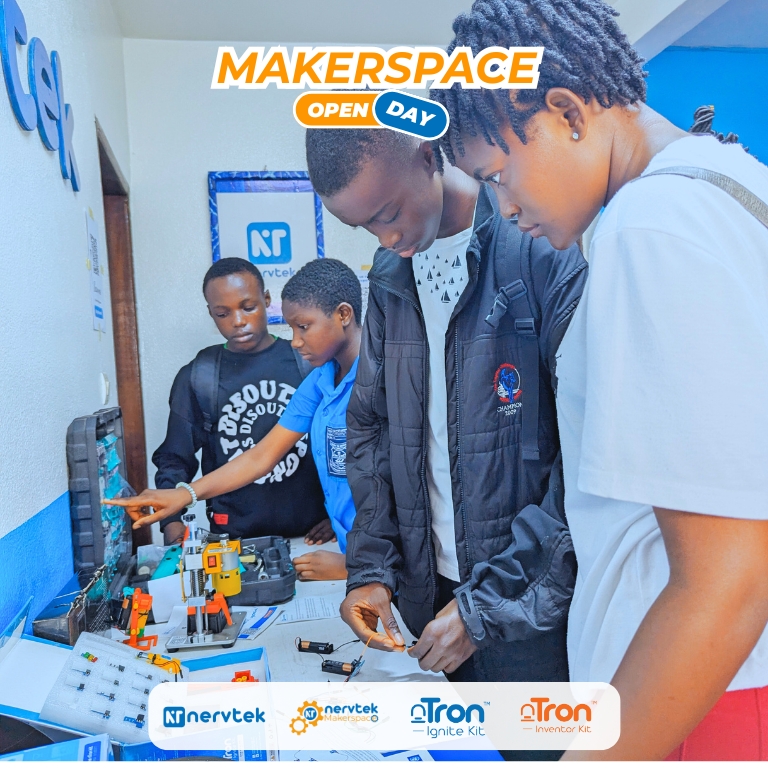
What Is a Makerspace?A Makerspace is a dedicated workspace where a community meets to share ideas, practice skills, explore creativity, and solve problems. Nervtek Makerspace, established in 2020, is one such hub located on the top floor of the Ecobank Building in Molyko, Buea, Cameroon. Makerspaces provides hands-on practice and the necessary resources to bridge the gap between theory and practice. Also, for first timers Makerspaces can be the ideal place to build a professional network and meet mentors or showcase your know-how. There exist three branches of Nervtek (Nervtek Education, Nervtek Community and Nervtek Makerspace). Makerspaces are essential to innovation because they bridge the gap between theory and practice. Nervtek’s approach provides hands-on experience and access to technology that empowers first-timers to build professional networks, gain mentorship, and showcase their know-how. For the Nervtek community, this is more than a learning space it’s a launchpad. As CEO Nzometiah Nervis explains, Nervtek bridges the gap between classroom theory and hands-on innovation by giving youth the tools to use STEM to create solutions in the real world. This inclusive hub welcomes beginners and experts alike from school children to educators and local innovators all collaborating to build a more sustainable digital economy. The Nervtek VisionNervtek Makerspace aims to deliver quality STEM education by providing access to cutting-edge tools, mentorship, and structured training programs. We target students, innovators, startups, and underrepresented groups including girls and youth from underserved communities through outreach and meetup programs that ensure everyone gets a chance to learn, build, and grow. The Makerspace is currently managed by Engr Youmbi Harold, who oversees the coordination of projects, mentorship activities, and innovation programs at the facility. Under his leadership, the space continues to grow as a hub for collaboration, exploration, and technology-driven problem solving. State-of-the-Art Facilities and ResourcesNervtek Makerspace offers a fully-equipped workshop where creativity meets technology. It boasts an impressive array of tools, including: 3D Printers – Nervtek’s skilled designers assist members in bringing their creative concepts to life through precise 3D modeling and printing. Robotics Kits – Allowing users to experiment with automation, sensors, and physical computing. Beyond its hardware, Nervtek has developed its own STEAM learning kit: the nTron™ Ignite Kit. This educational toolkit (designed in-house) makes science fun and interactive. It includes a manual with 10+ experiments, modular electronics, a solar panel, motor, and a “walking robot” (nBot) so students can experiment with solar energy, circuits, mechanics and robotics. Teachers use it to make lessons on electricity and robotics truly hands-on. VR/AR Headsets – For exploring virtual simulations, training, and immersive experiences. Drones – Featuring piloting sessions for aerial photography, drone engineering, and remote sensing applications. Electronics & Soldering Stations – Fully equipped for circuit development, Arduino prototyping, and hands-on electronics practice. Computers & Internet Access – Workstations connected to high-speed internet for research, software development, and collaboration.  nTron Educational Kits – Designed by Nervtek to teach energy, robotics, and coding in a fun, structured way. CNC Machines and Laser Cutters – Supporting high-precision fabrication and prototyping. Available Services: Nervtek Makerspace also offers professional services in 3D printing, product development, drone services, and PCB design, making it a go-to hub for innovators and entrepreneurs looking to build and launch impactful tech products. Programs and ActivitiesOur training programs are designed to make STEM accessible and actionable for everyone: STEM Outreach Programs – Bringing interactive science and tech demonstrations to schools and community centers. Workshops and Bootcamps – Offering focused, intensive skill-building sessions in fields like UI/UX, programming, robotics, and 3D design. Holiday Tech Camps – Held during school holidays to engage children aged 6–17 in creative, hands-on tech projects guided by Nervtek mentors.   Girls Tech Camp – Dedicated to empowering girls with skills in coding, engineering, design, and more through inclusive mentorship. Each activity ensures participants gain practical experience, mentorship, and confidence in navigating modern technology. Robotics Clubs: Nervtek Makerspace has helped establish robotic clubs schools [GTHC Molyko, CUIB Buea]  establishing a year-round STEM clubs and hosts virtual talks by experts to inspire teens. Project PortfolioOver the years, Nervtek Makerspace has nurtured a growing number of successful projects, including:nTron Ignite and Inventor Kit, Scribble Robot, Wirebuzz Games, Sumo Robot, Night Lamp, Laser Cut Brand Logos, Laser Cut Puzzles, Keychains, Laser Cut Phone Stand, Robotic Arm, Solar Tracker, Automatic Trash Can, 3D Recycle Robot, Pill Dispenser, Smars Rover, Acrylic Name Tag. These projects all available at the space demonstrate the power of hands-on education and the innovative spirit of Nervtek’s community. Impact and Success Stories [Visit our Youtube Channel for more]Nervtek’s impact reaches beyond the makerspace walls. Graduates of its programs have gone on to present projects to Cameroonian leaders and participate in national innovation fairs. More importantly, many participants return to teach others: after HTC, students started tech clubs in their schools, spreading the skills and confidence they gained to their peers. This peer-to-peer teaching – supported by Nervtek’s ongoing mentorship – keeps the technology journey alive year-round. In interviews, parents and educators praise Nervtek’s approach. Students who were once unsure about tech become ambitious and clear on how they can use STEM for social good. Through hands-on innovation, Nervtek is helping Cameroon’s youth transform from tech consumers into creators and problem-solvers. By providing the tools needed to make their dreams a reality, Nervtek truly lives up to its motto. A Culture of Innovation and InclusionNervtek Makerspace is more than just a facility it’s a culture built around teamwork, diversity, and innovation. It provides an environment where young individuals from both technical and non-technical backgrounds unite to build meaningful solutions. As members collaborate, they also build a shared identity rooted in creativity, empowerment, and continuous learning. Nervtek is also actively narrowing the digital divide by providing access to tech and mentorship for underserved communities. In doing so, it’s helping to shape a future where opportunity isn’t defined by geography or background. Testimonials“Nervtek MakerSpace is an incredible hub for creativity and innovation! I had the opportunity to explore 3D modeling, laser cutting, and drone piloting, and the

Nervtek Makerspace: Cameroon’s Youth Innovation Hub for Hands-On STEM Read More »

Easter STEAM Fest Bamenda

Easter STEAM Fest 2025 – Inspiring the Future of Tech in Bamenda

Nervtek called, and Bamenda answered! The Easter STEAM Fest 2025 was a huge success. Last week, Nervtek Education organized a 3-day tech adventure that lit up Bamenda! Hosted at EduCare and Full Gospel Bilingual Primary and Nursery School (FUGOBPANS), the 3-day event saw over 197+ young learners aged 7 to 17 turn out across the two locations eager to learn and kick-start their journey into the world of technology. The workshop brought together bright minds who were introduced to cutting-edge technologies like robotics, coding, artificial intelligence, 3D modeling, and virtual reality. Under the guidance of Nervtek’s STEAM Educators and volunteers, these learners dove into hands-on sessions designed to spark curiosity and ignite creativity. Armed with powerful tools like nTron ignite kit, Tello drones, Meta Quest VR headsets, Creality 3D printers, mBot robots, and mBlock, the children didn’t just watch they built, coded, and created. They piloted drones, explored immersive virtual worlds, made robots move, designed in 3D, and saw their own code come to life. The energy was electric. Smiles and excitement filled the rooms as kids imagined their futures as engineers, developers, designers, and innovators. Supported by UNDP Cameroon, which provided essential resources like laptops, VR headsets, the Easter STEAM Fest was more than just a holiday program it was a launchpad for future innovators. As the program came to a close, one question echoed in every space: “When will you be coming back?” We heard you, Bamenda! That’s why we’re excited to announce that Holiday Tech Camp 2025 is coming to Bamenda. This is your chance to build on the STEAM Fest momentum and take your child’s tech skills to the next level. Registration is now open secure a spot for your child today! Let’s keep the tech spark alive. The future is now!

Easter STEAM Fest 2025 – Inspiring the Future of Tech in Bamenda Read More »

HOLIDAY TECH CAMP 2024

Holiday Tech Camp (HTC): Inspiring the Next Generation of Innovators

“We don’t want our children to see STEM (Science, Technology, Engineering, Mathematics) fields as rocket science or imaginary. We want them to have a belief system that they can use STEM to create solutions. Therefore, we are providing them with the tools needed to make their dreams a reality.”— Nzometiah Nervis, CEO, Nervtek This powerful vision lies at the heart of the Holiday Tech Camp (HTC) – a transformative program designed by Nervtek Education to ignite curiosity, build future-ready skills, and shape young minds into Africa’s next generation of innovators. Our goal is to inspire creativity, innovation, and a growth mindset, ensuring that the youth are well-prepared to tackle the challenges and opportunities of the digital era. What Is the Holiday Tech Camp (HTC)? Held during the summer holidays from and June to July in Bamenda and July to August in Buea,  HTC is more than just a tech camp. It is a gateway for children aged 6 to 17 to dive into the world of robotics, coding, artificial intelligence, web development, virtual reality, 3D design, drone technology, entrepreneurship, public speaking, team collaboration, and problem solving – all in a fun, interactive, and collaborative environment. What Do Children Learn at HTC? HTC isn’t your average holiday program. Each session introduces participants to a wide range of hands-on tech skills, including: Programming: Learn to code using beginner to advanced languages that encourage logic, creativity, and problem-solving. 3D Modeling & Printing: Design and produce physical models using digital tools. Robotics: Build and code robots to solve real-world challenges. Web Development: Explore how websites are built and develop your own from scratch. Leadership and Entrepreneurship: Develop confidence, communication, and problem-solving skills for real-world success. Embroidery: Discover the art of digital and manual embroidery as a blend of tradition and innovation. Drone Technology: Understand flight principles and gain hands-on piloting experience. Virtual Reality (VR): Step into immersive digital environments that expand your imagination. AI & Innovation Projects: Create intelligent systems that address real-life problems. Digital Safety: Build awareness on how to use technology responsibly and protect your digital identity. Why HTC Matters Africa is rapidly evolving, and the demand for local tech talent is growing. HTC empowers young learners to think like innovators, not just consumers. From flying drones to creating their own digital worlds, children begin to see technology as something they can control, shape, and use for good. Through this program, Nervtek is building a new future — one where African youth lead the way in innovation, creativity, and tech entrepreneurship. Key Benefits of the Holiday Tech Camp Here’s what sets HTC apart from other programs: Recognition & Exposure Participants have had the honor of meeting the Minister of Posts and Telecommunications of Cameroon. Projects have been presented to the Governor of the South West Region. Nervtek students have showcased innovations at the Silicon Mountain Conference — Cameroon’s biggest tech summit. Academic & Career Support Educational aid and scholarships are available through Nervtek and its partners. Mentorship & Community Learners connect with mentors in fields like engineering, tech, and entrepreneurship. The program builds a strong network of young creatives and critical thinkers. Leadership Development Courage, Kiki, and Bright did not just learn, they led. After HTC, they started tech clubs in their schools, spreading the skills and confidence they gained to their peers. This is what youth-led impact looks like.” The Nervtek Makerspace helps schools establish and run STEM clubs, keeping the tech journey going all year round. What Makes HTC Truly Special? The Holiday Tech Camp is not just a program – it’s an experience that transforms lives. It bridges the gap between classroom theory and real-world tech innovation. It’s where curiosity meets opportunity. At HTC, children don’t just learn about technology – they become creators.It’s the moment a quiet student stands up and proudly presents their invention.It’s when a group of kids works together to solve a challenge none of them could solve alone. Innovation with Purpose: HTC teaches young minds to think differently. It gives them the confidence to ask, “What can I build today that will make tomorrow better?” Growing Confidence & Critical Thinking: Through hands-on experimentation and teamwork, students learn to embrace failure as part of the journey, and to believe in their own voice and ideas. Inspiring a Vision for the Future: Many students start HTC unsure of their place in the world of tech. But by the end of the program, they’re buzzing with ambition, excitement, and a clear sense of purpose. A Glimpse from the Easter STEAM Fest 2025 Following the massive success of our Easter STEAM Fest 2025  with over 197 children participating in Bamenda  the momentum is only growing. For three unforgettable days, students programmed robots, explored virtual worlds, and watched their ideas come to life. The energy was electric. By the end of the program, one question echoed again and again:“When are you coming back?” Ready for the Future: Holiday Tech Camp 2025 is coming  With open arms and brighter minds, HTC 2025 is heading to Bamenda. Registration is now open.Secure your child’s spot today and give them access to a future shaped by creativity, innovation, and possibility.

Holiday Tech Camp (HTC): Inspiring the Next Generation of Innovators Read More »

Bridging Theory and Practice: Celebrating the International Day of Mathematics with African Institute for Mathematical Sciences (AIMS) – Cameroon

On March 14th, 2025, Nervtek Education had the privilege of joining African Institute for Mathematical Sciences (AIMS) – Cameroon to celebrate the International Day of Mathematics. This remarkable event brought together over 80 students and teachers from 7 schools in the Fako Division, South West Region. Our goal was to make mathematics more engaging by demonstrating its real-world applications through hands-on learning. During the session, led by our Makerspace Manager Engr Youmbi Harold, students and teachers explored fundamental STEM concepts using the nTron™ Ignite Kit by Nervtek. They transitioned from theory to practical’s by connecting LEDs, adding resistors, understanding color mixing with RGB, and even building the nBot. The excitement in the room was undeniable as participants saw how these theoretical concepts the learn everyday in class can be translated into tangible projects and real life experiences.   A key highlight of the session was the introduction to 3D printing and drone piloting. Students witnessed how mathematical principles like dimensions and calculations play a crucial role in designing 3D models and understanding drone physics. These insights not only deepened their appreciation for mathematics but also inspired many to explore careers in tech and engineering. It was fascinating to see teachers working alongside students, actively engaging with the projects. And of course, the big question remains – who do you think completed their projects the fastest? Thanks to the nTron™ Ignite Kit we are more committed than ever to bridging the gap between theory and practice. We look forward to empowering more students with hands-on STEM experiences in the future!

Bridging Theory and Practice: Celebrating the International Day of Mathematics with African Institute for Mathematical Sciences (AIMS) – Cameroon Read More »

Girls Tech Camp 2025

Girls Tech Camp 2025: Empowering Young Women in Tech and Business

Bringing Forth Tech and Business Divas Girls Tech Camp 2025 successfully took place in Buea, Cameroon, bringing together young women eager to develop practical skills in graphic design, t-shirt branding, CNC embroidery, digital marketing, and business branding. Hosted by Nervtek Education, this four-day program focused on hands-on learning, innovation, and entrepreneurship, empowering participants to transform their creativity into marketable skills.   Empowering Young Women for the Future The event was designed to equip young women with in-demand skills, enabling them to thrive in the digital economy. The goal was not only to introduce participants to technology but also to help them market their talents professionally. By gaining practical experience, these young women were encouraged to explore their full potential and take charge of their future careers. Kicking Off with Graphic Design The camp started with an interactive session on graphic design, where participants learned the fundamentals of visual communication. They were introduced to essential design tools and principles, allowing them to explore creative expression and develop their own personal projects. This hands-on approach ensured that they didn’t just learn theory but also applied their skills in real-world scenarios.   A Transformative Experience As Girls Tech Camp 2025 comes to an end, the impact is evident. The participants didn’t just learn technical skills; they also gained confidence, connected with like-minded peers, and explored new career paths. The energy, creativity, and enthusiasm they displayed were a testament to their potential. The journey doesn’t end here these young women are now equipped with skills that will help them navigate the tech and business world. Nervtek Education remains committed to fostering opportunities for young innovators, and we look forward to more impactful programs in the future!  

Girls Tech Camp 2025: Empowering Young Women in Tech and Business Read More »

Scroll to Top